Johns Hopkins Publishes Landmark Study on Psilocybin's Effect on Default Mode Network Connectivity
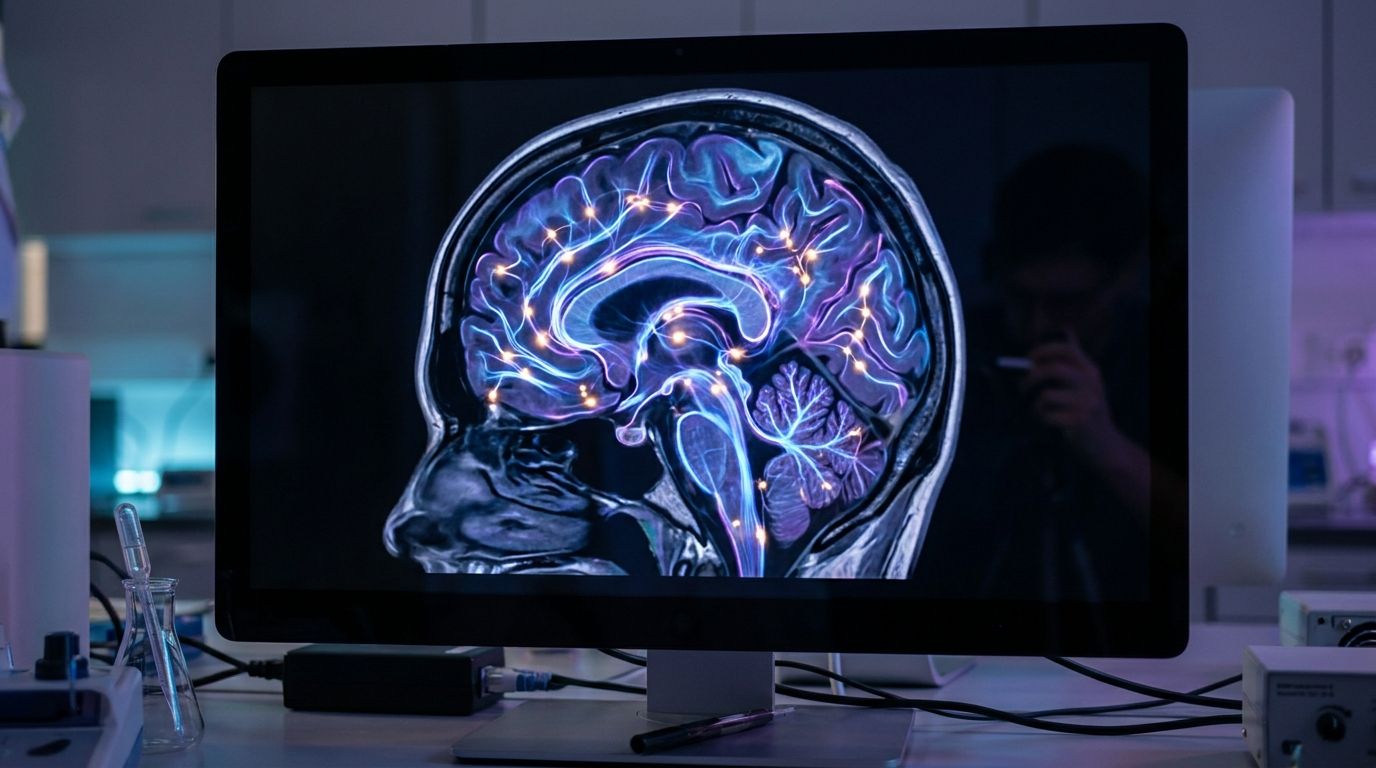
Researchers at the Johns Hopkins Center for Psychedelic & Consciousness Research have published results from a controlled neuroimaging study involving 84 participants with treatment-resistant depression. Using functional MRI scans taken before, during, and at multiple intervals after a single 25mg psilocybin session, the team mapped unprecedented changes in default mode network (DMN) connectivity.
The default mode network — a set of interconnected brain regions active during self-referential thinking, rumination, and mind-wandering — has long been implicated in depression. Overactive DMN connectivity is associated with the persistent negative thought loops characteristic of depressive episodes.
Key findings
- Acute DMN disruption: During peak psilocybin effects, DMN connectivity decreased by 40–60% compared to baseline
- Sustained reorganization: At 1-week follow-up, DMN connectivity patterns remained significantly altered from pre-treatment baseline
- 3-week persistence: Novel inter-network connections between the DMN and salience network persisted at 3-week follow-up in 71% of participants
- Depression correlation: The degree of DMN disruption during the acute phase predicted depression symptom improvement at 6-week follow-up (r = 0.67)
- Comparison to SSRIs: SSRI-treated controls showed no measurable DMN connectivity changes over the same period
"What we're seeing is not just a temporary disruption — it's a fundamental reorganization of the brain's self-referential circuitry. This gives us a biological mechanism that explains why a single dose can produce antidepressant effects lasting months."
Significance
This study provides the strongest neuroimaging evidence to date for psilocybin's mechanism of action in treating depression. Unlike SSRIs, which modulate serotonin levels systemically and require daily dosing, psilocybin appears to produce a one-time "reset" of dysfunctional neural circuits.
The findings also suggest that the therapeutic window extends well beyond the acute psychedelic experience. The persistence of new neural connections at 3 weeks aligns with clinical observations of sustained mood improvement following psilocybin-assisted therapy.
What's next
The research team is now planning a Phase 3 multi-site trial that will use DMN connectivity change as a biomarker for treatment response. This could enable clinicians to predict which patients are most likely to benefit from psilocybin therapy, personalizing treatment decisions.
Additionally, the team is investigating whether repeated low-dose (microdose) protocols produce cumulative DMN effects, which could offer an alternative pathway for patients who are not candidates for full-dose sessions.